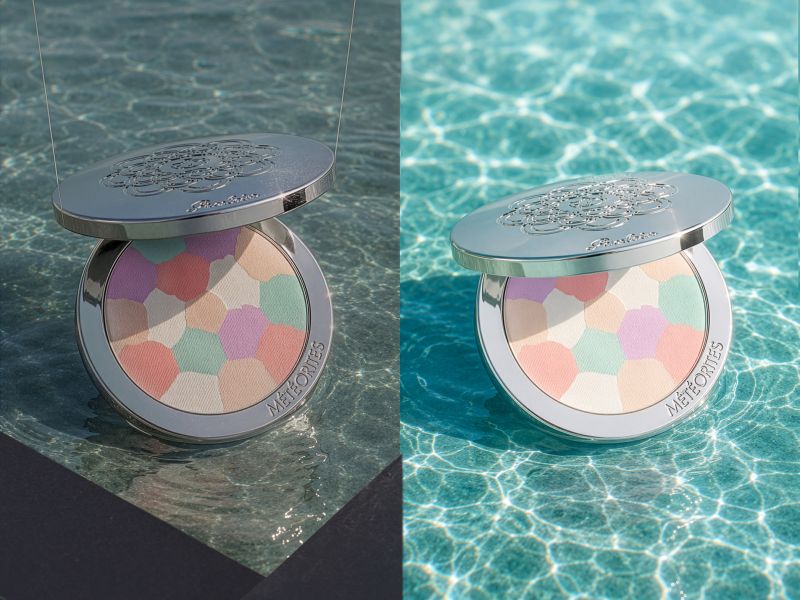
Perfect retouching does not exist, and that is rather good news: it forces us to say what post-production really does. Here are five truths you rarely hear, drawn from fifteen years of producing images for luxury houses.
Is a disappointing image from the shoot lost?
Not necessarily. An image that is "not great" at the shoot can be rescued by post-production, and far more often than you might think: light rebalanced, colours corrected, material cleaned up, recropping, harmonisation with the rest of the series. It does not rescue everything. An angle that does not show the product or a mood that is completely off must be redone at the shoot. To know where the limit lies, it is better to show the image to the retouching team before throwing it away or rebooking a session. For the errors that are most often corrected, see the three product photography mistakes.
Why is there back and forth in retouching, and how do you limit it?
Back and forth is not inevitable. It is almost always a sign that something started badly, not that something ended badly. When the brief is vague, everyone interprets "make it more premium" in their own way and the corrections pile up. With a solid brief at the start (references, art direction, formats, points of vigilance), the first version already looks like the final one. This is why we run the brief, the production and the retouching together.
How long does beauty retouching take?
Beauty retouching cannot be improvised, but it does not necessarily take weeks. The time depends on the complexity of the image and the experience of the person handling it. An experienced retoucher, on a complex image, can deliver a polished result in a few hours. The goal remains that the intervention is not visible: skin that has been worked on for hours should look untouched.
Why is colour accuracy so important?
Because it is the detail nobody notices when it is right, and everyone sees when it goes off. For a luxury brand, the colour of a product is part of its identity. A red, a gold or a blue that drifts from one image to the next is immediately visible on a board or on a website. Colour is calibrated upstream from the brand's references, then checked image by image across the whole series.
Does AI replace the retoucher?
No, it changes what they do. Repetitive tasks get automated. The eye, the standards and brand consistency do not. We use AI as a tool serving the art direction, not as a substitute for human control. The details of this approach are on the page AI for luxury.
What is post-production controlled from end to end?
It is post-production that starts before the shoot, with a clear brief, continues with retouching anchored in the art direction and ends with a quality check across the whole series, with one single person following the whole. Perfect retouching does not exist. Post-production controlled from end to end does. To scope a project, you can contact us.